































 Call Us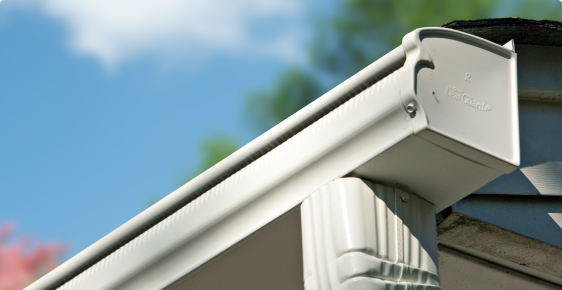
Gutters: you probably don’t think too much about them. That is, until you get a long week of rain, or it’s fall, and you’re up on a ladder dredging up leaves and twigs that have built up over the year. But then, you might notice a sag in one place. Or maybe you see some water overflowing and starting to pool by your foundation.
This is a common story among homeowners. And because you don’t really think about gutters often, it might be that you don’t know the issues with your gutter until they arrive.
Gutters are important in protecting your home from basement flooding, wood rot, and foundation damage, so it helps to know what you’re looking at. In this article, we look at why gutters are important, break down every part of the gutter, and explain how each part works so that you can make the best decisions when it comes to purchasing a gutter that provides the best protection of your home.
Why Homeowners Should Understand Their Gutter System
You don’t need to be a gutter contractor to know how a gutter system works. Understanding what gutters do and which parts are responsible for certain features allows you to know if the whole system is working properly. It can help you catch issues before the damage is already done, saving you costly repairs to your home.
What Gutters Do for Your Home
Gutters first and foremost exist to move water from rainfall away from your home. This prevents water damage that can lead to:
- Cracks in your foundation
- Flooding
- Standing water that invites infestations
- Mold growth in and outside of your home
- Siding and trim damage
The functionality of a gutter also plays an aesthetic role in your home! Gutters can hurt or help the appearance of your home, and as a result, your home’s value.
Issues with One Part Can Cause System-Wide Problems
Because a gutter is a precise design of physics, all of its parts are important for healthy gutters. If one section fails—if there is a leak, a clog, a sag, or rust—the flow of water is disrupted, and can build up. The excess weight on the gutter can alter the precise slope needed to direct water toward the downspouts. It can strain parts that cause the gutter to pull away from the roofline. Water can overflow and pool around the home’s foundation, cracking concrete foundations and creating water damage in basements.
Thankfully, this can all be prevented with a good gutter.
Upgrading to a superior design and performance will protect your home from water damage, and could even eliminate the need to climb a ladder for the chore of keeping them clean.
Companies like Great Day Improvements offer expert gutter replacement and installation to give you peace of mind when it comes to the safety and preservation of your home no matter the weather.
A Complete Breakdown of the Main Gutter Components
Now that we know the importance of the gutter system, let’s take a look at gutter parts and learn gutter terminology.
Structural Elements of the Home for Gutters
Structural parts of the house help hold gutters and act as a first line of defense against water. Gutters are traditionally hung from a horizontal board, called fascia, located directly under a building’s roof. Fascia tends to be cut at a vertical angle (a plumb cut), allowing gutters to be completely level with the ground. Hanging gutters are attached to the fascia using a gutter bracket.
The portion of the roof that overhangs overhanging portion of the roof, above the fascia, are called the eaves. The eaves help to drive water away from the side of the house. Water is corralled off the eaves and into the gutters with the help of two components. A waterproof underlayment called eaves flashing membrane can be applied to eaves that prevents water from getting under the shingles and seeping into the fascia boards. There is also a drip edge, which acts as a bridge from the roof to the gutter and placed along the eaves in order to drive water clear of the fascia below and prevent water from seeping in.
This whole structure together is given a clean and finished look by the soffit, the space that spans underneath the roof to the edge of the siding. This can be exposed (known as open) or covered (closed).
Gutter Elements
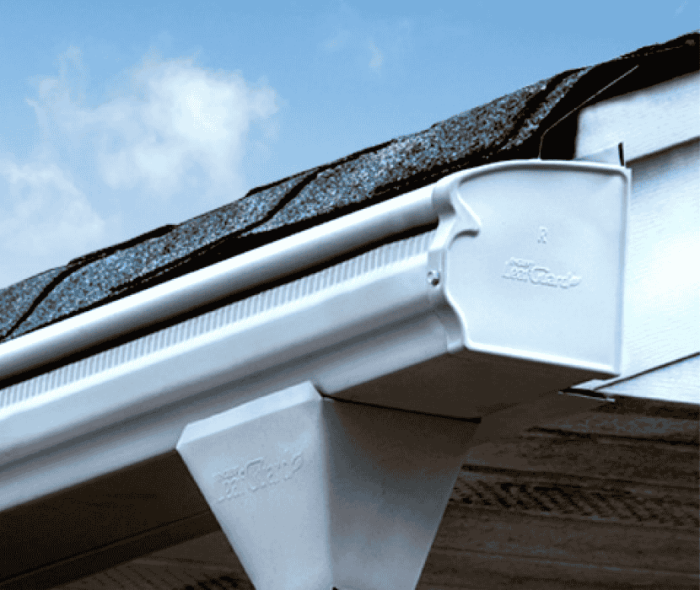
Once water has been successfully moved off of the house, it’s the job of the gutters to do the rest. A gutter end cap prevents water from spilling out haphazardly off the side of the gutter system.
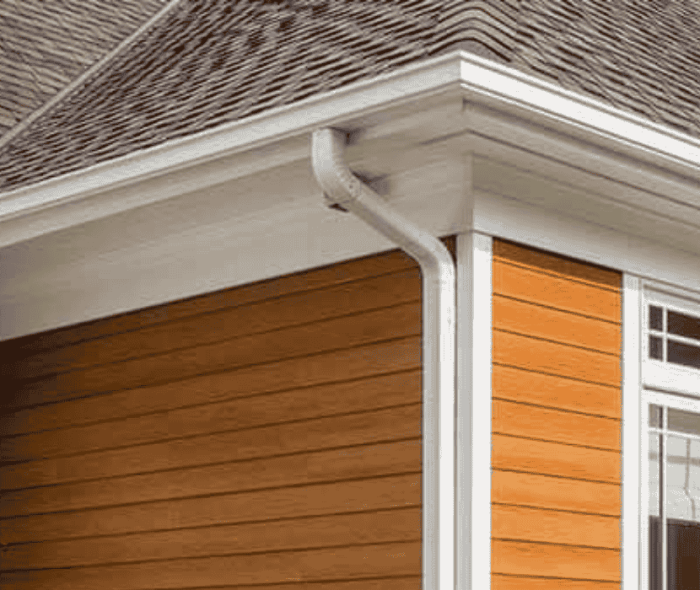
Connected to a gutter system with a downspout outlet, often pointed toward a sewer, a pitched area of lawn, or a rain barrel, is the downspout. Water that falls into the gutter and down the downspout will be directed away from your home’s foundation.
The gutter elbow additionally helps with water flow. A gutter elbow at the top portion of a downspout curves towards the ground, directing the water down. A gutter elbow at the bottom of the downspout curves outward, directing water away from the house. Some homes have a splashblock—a ramp at the bottom of the elbow that keeps water farther away from the foundation of the house.
The splashblock is a ramp from the bottom of the downspout/elbow. It drives the water farther away from the foundation of the house.
Gutter Terminology and Definitions
| Bracket | A gutter bracket reinforces the hanging gutter. A large nail or screw is put through the bracket and onto a surface of the house, usually the fascia. |
| Drip Edge | The drip edge acts like a bridge from the roof to the gutter. It is placed along the eaves to drive water clear of the fascia below and prevent seepage underneath. |
| Downspouts | Downspouts are the vertical pipes that connect a building’s gutter system with the end destination of the water being corralled. The downspout usually points toward a sewer, a pitched area of lawn, or a rain barrel to direct water away from the building’s foundation. |
| Downspout Outlet | A downspout outlet is a connector piece from the gutter, allowing water to flow from the gutter system downward into the downspout or storage tanks. |
| Eaves | Eaves are the overhanging portion of a roof. Like gutters, the eaves drives water away from the side of the house. Within a gutter system, water is corralled off the eaves and into the gutters. |
| Eaves Flashing Membrane | Flashing membrane for the eaves is a material that prevents water infiltration through tiny areas underneath the roof eaves. |
| End Cap | A gutter end cap prevents water from spilling out haphazardly off the side of the gutter system. |
| Fascia | Fascia is a horizontal board located directly under a building’s roof. It is the “face” that gutters are traditionally hung from. |
| Gutter Elbow | The gutter elbow is at the top or bottom portion of a downspout that curves towards the house at the top and outward at the bottom, directing the water from the downspout away from the house. |
| Plumb Fascia | Also referred to as “plumb cut fascia”, plumb fascia is a rafter beam cut with a plumb line dropped to the ground. |
| Soffit | Soffit is the area between the top of a house’s side and the bottom of the roof. Sometimes covered, known as Closed Soffit, or an exposed undersurface, open soffit. |
| Splashblock | The splashblock is a ramp from the bottom of the downspout/elbow. It drives the water farther away from the foundation of the house. |
| Trim | Exterior trim is any component of wood that sits on a house along with siding and windows. It’s particularly vulnerable to rot and will rot at a quicker rate without a proper gutter system in place. |
Think your gutter has a problem? Get a consultation from our team at Great Day Improvements.
Quick Reference: Gutter Parts

Gutter Design: How They Work
Open Face Gutters
Gutters with nothing on top of them collect leaves, pine needles, and other debris, which can clog your gutter and downspouts. Without anything over top, the only way to defend against water back up or damage is by cleaning out the gutters by hand.
Hoods, Covers, and Helmets
Gutter heads, covers, or helmets are installed on top of open gutters in order to keep out leaves and other debris. Most hoods, covers, and helmets are designed as two pieces. Because they are not seamless, they can often sag or leak at their joints.
Gutter Screens and Mesh Toppers
Screens and mesh toppers are an inexpensive and relatively easy to find alternative used to keep out debris. While they work well against leaves, smaller debris like twigs or pine needles can easily slip through the cracks. Most mesh toppers aren’t very durable, and can blow away more easily in the wind. Explore your options to help you with the best gutter upgrade.
Leafguard Gutters
Leafguard gutters are a one-piece gutter system that uses the principle of liquid adhesion. Rain water clings to the curved, smoothed surface of the gutter, while leaves and other debris roll right off making them clog-free. The seamless design eliminates sags and water build up by ensuring the water flows as it should—away from your home. It’s also maintenance free. There’s no need to climb a ladder and spend more time on dangerous chores.
How to Spot If Your Gutter Has Issues
The good news is that issues with a gutter system won’t always be sneaky—there will be easy ways to spot problems. If you see any of these signs, it might be time to think about replacing your gutter system.
- Bowing and sagging gutters – A sagging gutter retains its original shape, but pulls away from the fascia and drops below its track, meaning below its usual straight line along the fascia. A bowing gutter’s physical walls warp or bend, looking like a curve or a crease in the metal. Both changes are signs of hardware failure of standing water causing excess weight on the gutter.
- Standing water – Standing water that doesn’t move down the downspout after a long rain may be a sign of a gutter system issue. Water may spill out of the edges. An increase of mosquitos and other pests around gutter can be an indicator of standing water.
- Debris build-up – Seeing piles of dirt, leaves, and twigs can be a sign of an issue with gutters. Sometimes, you can see plant and weed growth or smell a bad odor, as a result of decaying leaves and trapped dirt.
- Leaks or holes – Water dripping from behind the gutter, at other spots that don’t usually drip, or visible rust spots could be signs of a leak.
Noticing these issues means it might be time to change your gutters. If any of these sound familiar, Great Day Improvements can help! See some examples of gutter renovation projects to learn what Great Day Improvements can do for you.
Protect Your Home with Gutters from Great Day Improvements
Great Day and Leafguard can help you see what new gutters can do for your home. We offer free, no-pressure consultations to help you explore gutter solutions that fit your home, your style, and your budget.
Now when you notice gutters, you’ll be doing so from the safety and ease of the ground!
Gutter Frequently Asked Questions
Why are gutters important for my home?
Gutters direct rainwater away from your home, preventing issues like foundation cracks, basement flooding, mold growth, and damage to siding and trim. They are essential for protecting both the structure and value of your home.
What happens if my gutters aren’t working properly?
If your gutters fail, water can overflow or pool around your home. This can lead to foundation damage, wood rot, leaks, pest infestations, and costly structural repairs.
How do I know if my gutter is having issues?
Common warning signs include:
Sagging or warped gutters
Standing water or overflow
Visible leaks or rust
Debris buildup or plant growth
Increased pests around the gutters
What kind of gutter best protects the home from debris?
Screens, mesh toppers, and gutter covers/hoods all help to block debris, but tend to be less effective for small debris, or susceptible to breaks. Leafguard systems are seamless, and designed to prevent clogs using water adhesion.
How do I choose the best gutter system for my home?
Look for a system that minimizes clogs, requires little maintenance, provides efficient water flow, and fits your home’s design and budget. Consulting with a professional can help determine the best option for long-term protection.